Fwd: UPDATE: Complexity, Emergence and Systemic Change

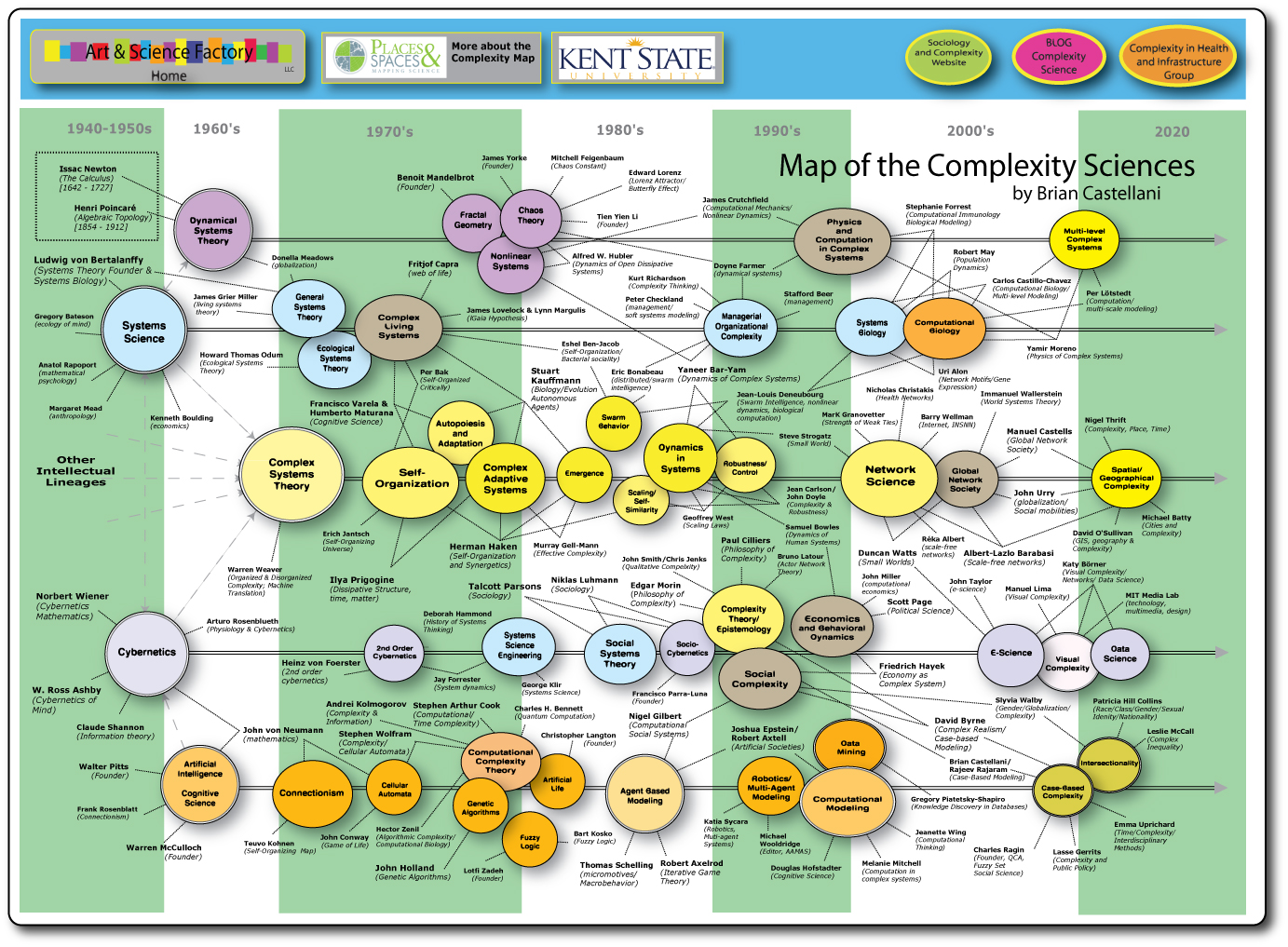
---------- Forwarded message ---------- From: Kenneth McLeod <[email protected]> Date: Wed, Mar 22, 2017 at 7:43 AM Subject: UPDATE: Complexity, Emergence and Systemic Change To: [email protected] Anthropocene Transition Project Complexity, Emergence and Systemic Change ------------------------------ It seems we have several people interested in doing the Santa Fe Institute's *Introduction to Complexity* free online course and participating in our own *face-to-face seminars* to explore the content in the context of social and cultural change in the Anthropocene Transition. Here is the link for the course: https://www.complexityexplorer.org/ courses/74-introduction-to-complexity-spring-2017 The course starts on 10th April and runs for 11 weeks, though you can extend it over a longer period if you wish (the course materials remain on line for some time to allow participants to proceed at their own pace). You can, of course, cherry-pick the course by doing just the units that interest you and skimming over the others. Suggested dates for our own seminars are: - *Monday 8th May* - *Monday 5th June* - *Monday 3rd July* All at 6pm at the Business School. At this stage these dates are provisional. If you want to participate but one or more of these dates are impossible for you, please let me know right away. At our third seminar we'll decide on the next step. *ACTION REQUIRED:* - *If you have already enrolled for the Santa Fe course or plan to do so, please let me know now.* - *Check the proposed dates for our seminars and confirm that you are available. If some dates don't suit some I'll run an online poll to find the best fit.* *Advance notice:* Next year the Macquarie University Big History Institute is planning a major conference on Complexity. Watch for further updates. Below is the first email about this proposal for your reference. Also attached is Thomas Homer Dixon's paper in case you missed it the first time and sociologist Brian Castellani's excellent overview. Here's Castellani's complexity map to induce you to read the article! Cheers, Ken ------------------------------ Dear ATP participants, At one of our ATP forums last year *Annie Kia* from the Lock the Gate Alliance explained how LTG's brilliantly successful community engagement strategy was informed by complexity theory. Following the forum a number of participants raised the idea of an on-going inquiry into complexity and social/cultural change. This idea has been raised with me on several occasions since. It seems to me that for an inquiry of this kind to be useful the participants would need at least a basic shared understanding of some of the key concepts in complexity science. Some ATP participants are very familiar with this field of scholarship. Others have only the most general understanding. *So here's an idea on which I'd like your feedback...* The Santa Fe Institute in the USA is a world leader in complexity science research and education. The institute runs an extensive education program from undergraduate to professional development levels. One of its most popular online courses (MOOCs) is *Introduction to Complexity*. *In this popular introductory course, you'll learn about the tools used by scientists to understand complex systems. The topics you'll learn about include dynamics, chaos, fractals, information theory, self-organization, agent-based modeling, and networks. You’ll also get a sense of how these topics fit together to help explain how complexity arises and evolves in nature, society, and technology. There are no prerequisites. You don't need a science or maths background to take this introductory course; it simply requires an interest in the field and the willingness to participate in a hands-on approach to the subject.* (From the SFI website) The next offering of this free course is from *10th April to 30 June* and is run by *Professor Melanie Mitchell*, author of *Complexity: A Guided Tour* (2009). You can see Professor Mitchell's introduction to the course here: https://www.youtube.com/watch?v=XKzXvxZN-OE&feature=youtu.be *Do we have any ATP participants interested in enrolling in this course and meeting a few times while it is running to review the content and discuss its relevance within the context of the Anthropocene Transition?* After the completion of the course these participants might form the core of an inquiry group to further explore the implications of complexity theory for approaches to social/cultural transformation. If you're interested in this subject I'm sure you'll find much of value in the attached talk by Canadian political scientist *Thomas Homer Dixon*. I'll look forward to receiving your thoughts on this or any similar suggestions. Best wishes, Ken -- ------------------------------ UTS CRICOS Provider Code: 00099F DISCLAIMER: This email message and any accompanying attachments may contain confidential information. If you are not the intended recipient, do not read, use, disseminate, distribute or copy this message or attachments. If you have received this message in error, please notify the sender immediately and delete this message. Any views expressed in this message are those of the individual sender, except where the sender expressly, and with authority, states them to be the views of the University of Technology Sydney. Before opening any attachments, please check them for viruses and defects. Think. Green. Do. Please consider the environment before printing this email. -- Check out the Commons Transition Plan here at: http://commonstransition.org P2P Foundation: http://p2pfoundation.net - http://blog.p2pfoundation.net <http://lists.ourproject.org/cgi-bin/mailman/listinfo/p2p-foundation>Updates: http://twitter.com/mbauwens; http://www.facebook.com/mbauwens #82 on the (En)Rich list: http://enrichlist.org/the-complete-list/

participants (1)
-
 Michel Bauwens