|
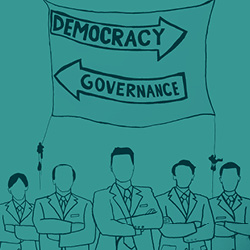
In
the era of globalisation, the
steady removal of
decision-making from
democratic chambers by EU elites
is serving as a blueprint for
post-democratic governance
around the world. Progressives
must be
ambitious and start putting
forward ideas for a democratic
world
government as a viable
alternative. Read more »
Economics
often
appears boring, but this
narrow, mostly male dominated
profession
decides on matters intimately
bound up with questions of
power,
democracy and vital matters of
health, education, social
welfare and
the environment. Meaningful
democracy requires the
participation of
ordinary people in economic
debates, so that they can
shape their own
lives in solidarity with
others. Read more »
Against
all
expectations, financial
capital has emerged even
stronger after the
financial crisis having staved
off regulation and putting the
blame on
public spending. But its
victory is likely a pyrrhic
one as a new
crisis looms, one in which the
global public could learn from
victories
such as reforms in Iceland and
finally reassert its control
over
money. Read
more »
The
World Economic Forum’s Global
Redesign Initiative is perhaps
the best
reflection of how corporations
and other elites envision the
future of
governance. It calls for
marginalising
intergovernmental
decision-making with a system
of multi-stakeholder
governance, but what
does this mean for democracy,
accountability and the rule of
law? Read
more »
Advocating
multistakeholderism
in the area of food and
nutrition has been one of
the main strategies for
advancing a pro-corporate
agricultural agenda
that results in dispossession
of small-scale farmers. Read
more »
Corporate
executives
and climate skeptics that
mobilise against strong
international climate change
agreements have rightly been
the focus of
attention of many people
concerned about the climate
crisis. But
another group of elites—those
who actually believe in
climate change
—may paradoxically have done
more to block effective
solutions to the
crisis. Read
more »
The
increasingly precarious nature
of work and life poses a
serious threat
to democracy as it undermines
our social fabric, atomizes
individuals
and seeks to personalize blame
for economic insecurity. What
potential
is there for ‘the precariat’
to become a new kind of social
movement
with a collective vision to
reimagine contemporary life? Read
more »
In
the wake of early 2010s
upheavals such as the Arab
Spring, Spain’s
indignados, or the global
Occupy movement, many
commentators were quick
to either invoke the presumed
tech-savvy of ‘digital
natives’ or the
purported ‘cyber-utopianism’
of net freedom advocates who
supported the
protests. But what role have
internet freedom activists –
or ‘freedom
technologists’ – played in
ongoing struggles for
progressive political
change around the world and
how can the pursuit of liberty
be combined
with the struggle for social
justice? Read
more »
Experiences
and
experiments in Spain, Brazil,
Istanbul and other cities
suggest
that a transnational
municipalism, based on
concepts of an open source
city (free online tools and
active citizen participation),
has the
potential to regenerate
democracy and build a
geopolitics of the
commons against
neoliberalism. Read
more »
India
has
strongly entrenched power
hierarchies that have
historical roots
but have also been exacerbated
by inequalities and injustices
that have
deepened with economic
globalisation. However
grassroots political
movements are emerging in
India that could signal a
gradual shift to
direct or radical democracy,
coupled with making
representative
democracy more accountable and
ecologically sustainable. Read
more »
| |
|
Democracia,
poder y
soberanía en
la Europa de
hoy
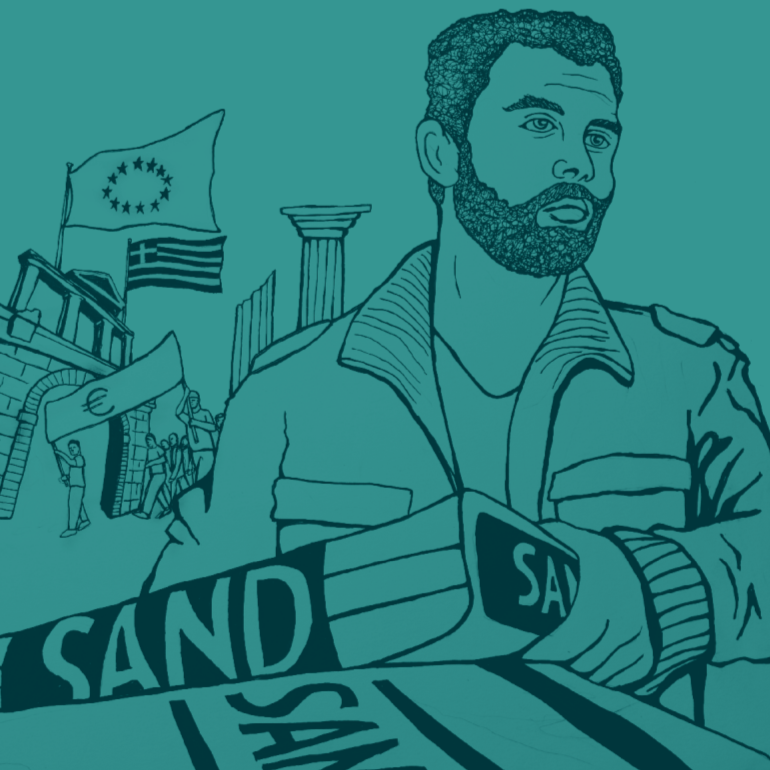
En
2015, Yanis
Varoufakis,
exministro
griego de
Finanzas, se
enfrentó a
las poderosas
instituciones
europeas. En
esta
entrevista
comparte sus
experiencias y
habla sobre
las amenazas
que se ciernen
sobre Europa
hoy
en día, así
como posibles
formas para
democratizarla.Leer más »
|
|
|
| |
|
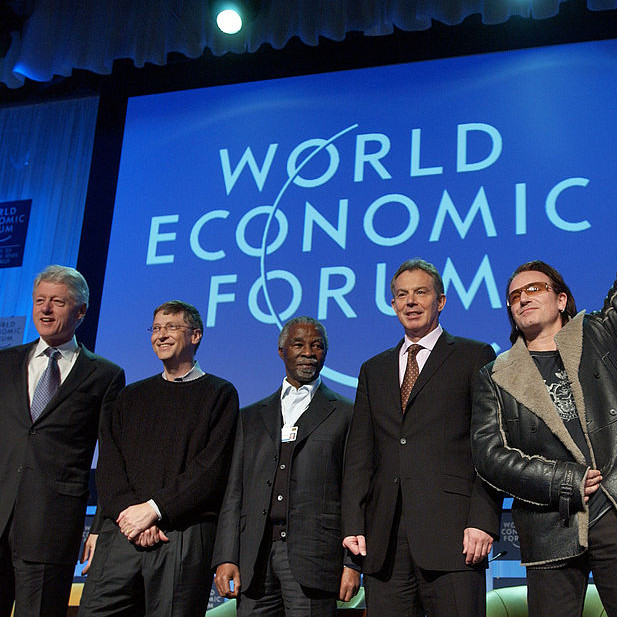
¿A
quién
representa
realmente el
Foro Económico
Mundial?
El
TNI analiza de
cerca la junta
directiva del
Foro Económico
Mundial para
intentar
entender a
quién
representan
sus
integrantes y
cuáles son sus
intereses
económicos y
convicciones
políticas.
¿Será este el
futuro de
la gobernanza
global? Leer
más »
|
|
|
| |
|
|
| |
|